Deep Dive · 02
Reading the Painting
Figures, iconography, and inscriptions
Reading a Newari narrative painting begins with identification: recognizing each deity by their attributes, each royal figure by their dress, each ritual object and gesture by its convention. Alongside the figures runs the writing, a line of Newari script above each register, narrating the scenes below it. Both are read together here.
Methodology
Part A · Figures & Iconography
The study of the painting proceeds in three steps.
- Tracing. The painting is traced on tracing paper to separate the objects and characters from the background, which is often painted in the same color and has very faint borders. Tracing gives clear versions of each composition and keeps every working mark off the painting itself, so nothing added in study can be mistaken for the original.
- Iconographic study. Each deity, figure, and object is identified by its attributes, following the conventions of Newar painting.
- Relationship study. The painting and the inscriptions are read against each other, tying it all together to see whether everything makes sense.
Scene Map
How the painting is divided
The painting reads like a page. Three horizontal registers run the length of the cloth, each crowned by a line of inscription that narrates it. Each register divides into two sections, and each section into scenes, read left to right, top to bottom. Select any scene to open it in Story Mode.
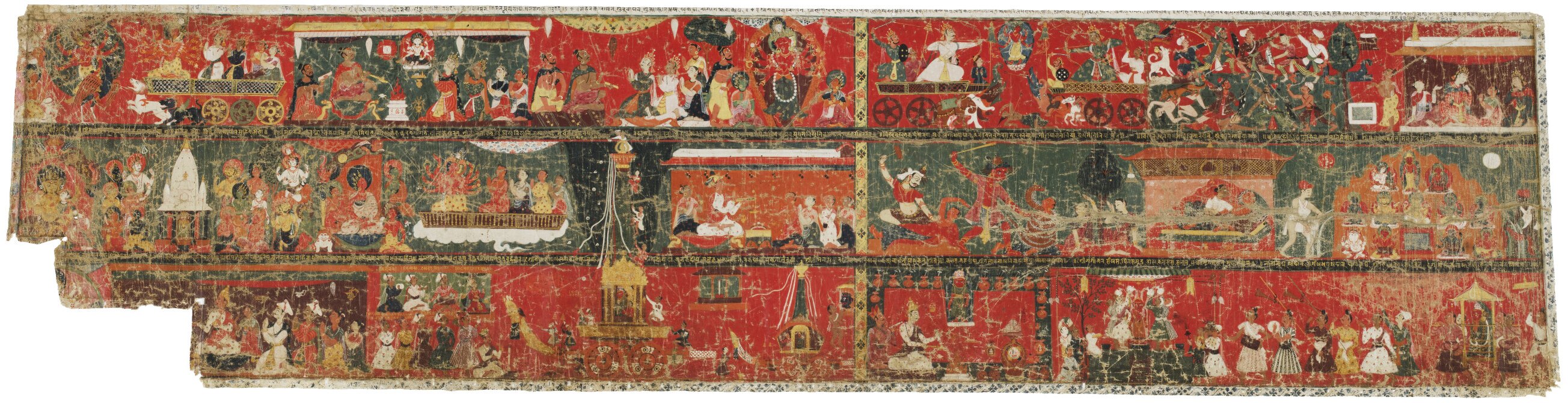
Scroll sideways to see the whole cloth.
Part B · Inscriptions
Each line, painted in golden yellow along a black band, was read directly from high resolution photography and carried through four stages, undertaken with Dr. Naresh Man Bajracharya and Dr. Puspa Ratna Shakya.
- Inscription reading. The lines are read directly from the cloth, character by character.
- Transliteration. The reading is carried from the Newari (Nepal Bhasa) script into Devanagari.
- Romanization. The Devanagari is mapped into the Latin alphabet using diacritical marks, so that non-Latin sounds keep their precision.
- Study of the script. The reading is then worked through by copying all of the script from each line into a clear grid. Much of the writing in the painting is damaged and illegible, so boxes are left empty for illegible characters and brackets are used for readings that are unsure but grounded in the professional intuition of Dr. Naresh and Dr. Puspa.
Each line of inscription is one continuous whole. The painting's scenes divide it visually, but the writing reads across those divisions, so the inscriptions are studied line by line, not scene by scene.
What the inscriptions name
The painting identifies its own cast. Working from the transliterated inscriptions, Dr. Naresh Man Bajracharya and Dr. Puspa Ratna Shakya indexed every named deity, king, person, object, place, action, and date across the three lines, then classified them so the painting's world can be taken in at a glance.
The table can be read three ways: a plain romanization, a scholarly transliteration with diacritics, or an English translation. Use the switch above the table to change between them.
Read the table as
| 1st line of Inscriptions | 2nd line of Inscriptions | 3rd line of Inscriptions |
|---|
Compiled by Dr. Naresh Man Bajracharya and Dr. Puspa Ratna Shakya. Some readings remain provisional.
The Scripts Chart
Every legible character from every line was copied into gridded charts, one cell per character, following the conventions described in the methodology above. The chart sections were then joined back into a single continuous line each, reading left to right. Because portions of each line are damaged, the inscriptions are best read as connected passages rather than word-perfect sentences. A word-by-word rendering from Newari into Nepali was prepared for each line; the English translations, prepared with Dr. Bajracharya, are forthcoming.
Reference
How to read the transcriptions
A dash (–) marks one illegible character; characters inside parentheses ( ) are unclear readings that are inferred from the expert opinion of Dr. Naresh and Dr. Puspa; square brackets [ ] are readings beneath another character or space; ॥✽॥ is a pair of daṇḍas enclosing a drawn auspicious symbol.
Line one · above the first register
In Devanagari
– – – – – श्व श्री – – – – – ॥१ – – – – – ॥ – – नै म्हं – – – – शु – – – – – – य ङ ॥ – – – – ह नि – – – से न् श्री अ मू क पा स् स के धर्म्म द न का शु क्ल (अ) स्त मि – र म द रा जा प ति से न् जि म न [द] पू न्य या ङ् (थ न वा गा क् – – – जु – ॥✽॥ म ह र क रि खि न् गु रु बो ङा व् शु क्रा स्ति मि ध म्म् खं क ङ् रा जा नै म्ह वौ का य् ॥✽॥ श्री म ह र क रि खि न् श्री लो कें श्व र – – – – – – लो के श्व र न ध र्म उ प दे स क – – ध र्म्म के तु च न्द्र के तु रा जा प नि नै म्ह वौ का य् र थ स द ङ व् ल्वा क् श्री लो के श्व र न् ग ङ् – – च न्द्र के तु रा जा न् – खि चा त ॥ ॥ म ह ज द जि म न द वा म गा ङ व् जा ति हा व् थे थे ल्वा क् वौ का य् फू कि ज् सी क् प र् खि चा को ख न न ङ् ॥? म ग ह द – – रा जा ध र्म के तु च न्द्र के तु ने म्ह चा य ख दे स स् क्षां – – – चा स – क
Romanized, with diacritics
– – – – – śva śrī – – – – – ||1 – – – – – || – – nai mhaṃ – – – – śu – – – – – – ya ṅa || – – – – ha ni – – – se n śrī a mū ka pā s sa ke dharmma da na kā śu kla (a) sta mi – ra ma da rā jā pa ti se n ji ma na [da] pū nya yā ṅ (tha na vā gā k – – – ju – ||✽|| ma ha ra ka ri khi n gu ru bo ṅā v śu krā sti mi dha mm khaṃ ka ṅ rā jā nai mha vau kā y ||✽|| śrī ma ha ra ka ri khi n śrī lo keṃ śva ra – – – – – – lo ke śva ra na dha rma u pa de sa ka – – dha rmma ke tu ca ndra ke tu rā jā pa ni nai mha vau kā y ra tha sa da ṅa v lvā k śrī lo ke śva ra n ga ṅ – – ca ndra ke tu rā jā n – khi cā ta || || ma ha ja da ji ma na da vā ma gā ṅa v jā ti hā v the the lvā k vau kā y phū ki j sī k pa r khi cā ko kha na na ṅ ||? ma ga ha da – – rā jā dha rma ke tu ca ndra ke tu ne mha cā ya kha de sa s kṣāṃ – – – cā sa – ka
The line in brief
(Note: Inscriptions on scene 1 from register 1 could not be read properly, so there may be gaps in the translation. However, this applies to the other registers as well, as there is notable damage to the cloth.)
After the king built a religious circle to worship Amoghapash Lokeshwor, on the day of Shukla Ashtami he gained merit from Shree Lokeshwor, who then caused rain to fall. Dharmaketu, the king, and Chandraketu, his son, called a great sage to recite the story of Amoghapash Lokeshwor and his compassion. But before the sage could tell the story, the king and his son began fighting atop their chariots. Lokeshwor himself had to break up the fight. The country of Magadha had become unlivable due to the lack of rainfall. With nothing to eat, the people were forced to fight amongst themselves, even father and son, and to kill their own family and relatives. Dogs and crows ate the dead bodies. Both kings, Dharmaketu and Chandraketu, were confused to see their country’s ponds filled with water again.
Line two · above the second register
In Devanagari
– – – – – – क्तां स हि त ॥ ॥ श्री – – – – – – श्री तै लो के श्व र् – – – श्री म हा दे व् ब्र म्हा वि ष्णु लो क पा र स हि त् स भा ॥ ॥ श्री म हा दे व – ब्र म्हा व ज्र पा नि श्री अ मि ता भ गा – – क्र कु छ न्द त था ग त् श्री लो के श्व र न् श्री – र – वि – खं वि खु वि खु नि – – – – स र्व – – वा न थ – – – व ज्र स त्व ॥ ॥ का र न (वि) (भु) उ – – – वि खु (न) – – – – (वि) ता – – – – – त व ङ व् प थ म वि खु (य) ॥ ॥ वि खु न ख त क र्म्म तो र ता अ कु रि शो ध या ङ् न् ज म द्रु त न् तु (त) र स मु ग र न वा – ना ग पा श न वि या र् प थ म ति रि या (वै) र (ज्ञ) ॥ ॥ वि खु न थ व प थ म ति रि ता व् अ कु रि गा – या क ॥ ॥ ध्व – हा कु हि – हि – जो – – नि र्म – (ती) र्थ स – – प ह त स स म न्त दे व – – – – – अ – – ङुं च – – – – – – – न
Romanized, with diacritics
– – – – – – ktāṃ sa hi ta || || śrī – – – – – – śrī tai lo ke śva r – – – śrī ma hā de v bra mhā vi ṣṇu lo ka pā ra sa hi t sa bhā || || śrī ma hā de va – bra mhā va jra pā ni śrī a mi tā bha gā – – kra ku cha nda ta thā ga t śrī lo ke śva ra n śrī – ra – vi – khaṃ vi khu vi khu ni – – – – sa rva – – vā na tha – – – va jra sa tva || || kā ra na (vi) (bhu) u – – – vi khu (na) – – – – (vi) tā – – – – – ta va ṅa v pa tha ma vi khu (ya) || || vi khu na kha ta ka rmma to ra tā a ku ri śo dha yā ṅ n ja ma dru ta n tu (ta) ra sa mu ga ra na vā – nā ga pā śa na vi yā r pa tha ma ti ri yā (vai) ra (jña) || || vi khu na tha va pa tha ma ti ri tā v a ku ri gā – yā ka || || dhva – hā ku hi – hi – jo – – ni rma – (tī) rtha sa – – pa ha ta sa sa ma nta de va – – – – – a – – ṅuṃ ca – – – – – – – na
The line in brief
(Note: This line of inscription is a blend of story and tradition.)
With Shree Trailokeshwor, Shree Mahadev, Brahma, Vishnu, Vajrapani, Shree Ambitabh, Krakuchanda Tathagata, Shree Lokeswor, monks and nuns, and all gods, Vajra or diamond beings, etc. The monk left his first nun. The first nun performed the six actions of purification, but the monk left her and committed immoral acts instead. Yamdoot, the agent of the god of death, beat the monk on the chest with his hammer and tied him with snakes. The monk had left his wife and committed immoral deeds. Then all the gods gathered at the location of sacred water.
Line three · above the third register
In Devanagari
– – – – – हा र – – – – श्री – – – – भ – – – – – – – – ओ न्ह – – – – – लो ङ प्र ति ष्ठा या ङा [रि] [पु] न्य त म जि व हि रा ख्व – – स – – या क – – स – हि – ने च – व् धू नू का दि न थ्व् सं स्व त् ८ ३ २ श्रा व ण कृ ष्ण च तु द शि म घ न क्ष त्र बु दु वा रा ॥ (?)श्री तै लो के ना थ् (र) थ – – वि ज्या च कं – जा त्रा या ङ् अ ने क ध्व जा लो ह न् र क फो – प क वा न रू या – श्री मी न ना थ या र थ् – – द नि या ङ् – आ चा र्य न पा थ क न श्री व्र म्हा क ल स् ज ज्ञ या ङ् श्री तै लो के ना थ वि वा ह या ङा जा त्रा या (य) या धा? धौ त ॥ श्री ग ङ्गं ज र् सं ख स् प्रि व स ओ झे क ल स स् स ना न् प ज्वा मृ त (स) (हि) त म हा स ना न ॥ ॥ ना ना वा द्य् था ङ् व् सु जं ध धू प थ ङ व् घ छु वा द्य् श्रँ – भ् – – भ् स हि त नं श्री तै लो के ना थ म हा स ना न या च के बि ज्या च का – त
Romanized, with diacritics
– – – – – hā ra – – – – śrī – – – – bha – – – – – – – – o nha – – – – – lo ṅa pra ti ṣṭhā yā ṅā [ri] [pu] nya ta ma ji va hi rā khva – – sa – – yā ka – – sa – hi – ne ca – v dhū nū kā di na thv saṃ sva t 8 3 2 śrā va ṇa kṛ ṣṇa ca tu da śi ma gha na kṣa tra bu du vā rā || (?)śrī tai lo ke nā th (ra) tha – – vi jyā ca kaṃ – jā trā yā ṅ a ne ka dhva jā lo ha n ra ka pho – pa ka vā na rū yā – śrī mī na nā tha yā ra th – – da ni yā ṅ – ā cā rya na pā tha ka na śrī vra mhā ka la s ja jña yā ṅ śrī tai lo ke nā tha vi vā ha yā ṅā jā trā yā (ya) yā dhā? dhau ta || śrī ga ṅgaṃ ja r saṃ kha s pri va sa o jhe ka la sa s sa nā n pa jvā mṛ ta (sa) (hi) ta ma hā sa nā na || || nā nā vā dy thā ṅ v su jaṃ dha dhū pa tha ṅa v gha chu vā dy śrām̐ – bh – – bh sa hi ta naṃ śrī tai lo ke nā tha ma hā sa nā na yā ca ke bi jyā ca kā – ta
The line in brief
(Note: This line of inscription is a blend of story and tradition.)
Repaired and consecrated. Meritorious work. Completed on Sambat 832 Shrawan Krishna Chaturdashi, Magha Nacchytra, Wednesday. Shree Trailoknath was seated in the chariot. A religious procession was held, hoisting many flags and ritual cloths and presenting many sweet dishes. The Acharya recited the religious texts while keeping a Shree Brahma kalash to worship him. Shree Trailoknath then underwent the ten essential religious rites of life in the Hindu tradition, called Dashakarma, including marriage. He was then bathed in Shree Ganga water, worshiped by blowing a conch shell with water from 4 different oceans, and bathed from a silver Kalash with a mixture of 5 sacred ingredients called Panchamrit. Playing various musical instruments, including animal-horn instruments called Shringabheri, burning fragrant incense, and ringing ritual bells, Shree Trailoknath was taken for the great ablution.
Finding
The painting dates itself
The third line closes with a date written in Nepal Sambat, the calendar of the Newar people: the year 832. Nepal Sambat began in 880 CE, so adding 880 to a Nepal Sambat year gives the year in the common era. Nepal Sambat 832 is 1712 CE, the very date the museum records for the painting. By the same count, the present year, 2026, is Nepal Sambat 1146.
Read from the painting by Dr. Naresh Man Bajracharya and Dr. Puspa Ratna Shakya. Unpublished field research for this project.
Line three fragment · a partial second reading
One further section of line three (appearing in scene 19 outside the black and gold strip of inscriptions) survives in the charts as a short list of names, each preceded by an unread character marked "?".
In Devanagari
? ज स व न्त जू ? म हे श्व र जू ? का य छ वि ष्णु – वि र ? श्री श्री म ही न्द्र म ल्ल दे व था कु र
Romanized, with diacritics
? ja sa va nta jū ? ma he śva ra jū ? kā ya cha vi ṣṇu – vi ra ? śrī śrī ma hī ndra ma lla de va thā ku ra
The line in brief
In the presence of Jaswantaju, Maheswarju, Kayashtha Vishnu Vir, Shree Shree Mahindra Malla Dev Thakur, they did the chariot procession of Trailokyanath.
Finding
A king the date agrees with
This line mentions the name of King Mahindra Malla. Looking at the rulers of Patan during the Malla dynasty, which ran from 1201 to 1769 CE, King Vira Mahindra Malla ruled Patan from 1709 to 1715 CE. The date read on the painting, 1712 CE, falls exactly during his ruling period. Vira is the romanized diacritical form of "Bir", which means heroic in Newari (Nepal Bhasa).
Reign dates after Vira Mahindra Malla, king of Patan, 1709 to 1715 ↗ The identification of the name in the inscription is the reading of Dr. Naresh Man Bajracharya and Dr. Puspa Ratna Shakya.