Deep Dive · 03
FAQ with a Local
A conversation with Siddhartha Guvaju (Sid)
As someone who lives the tradition, Sid shares what Bunga Dyo means to the locals today.
About Sid
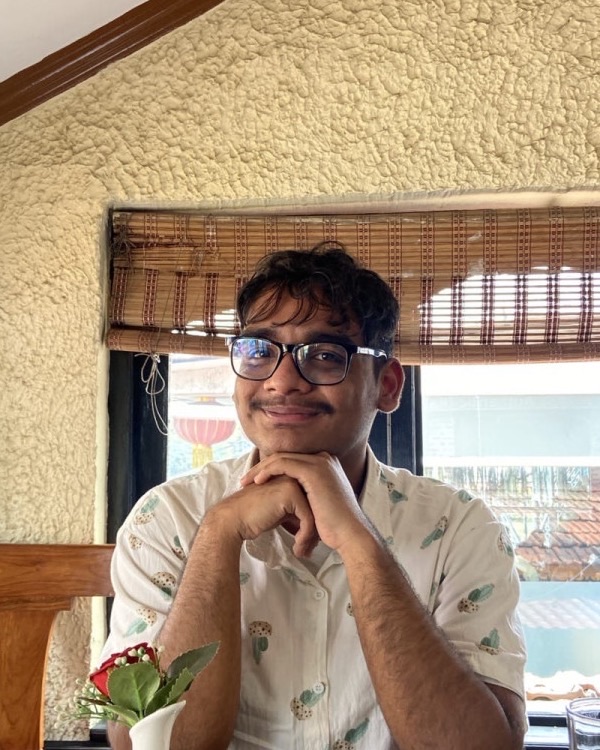
Sid is a queer feminist and a member of the Newar community from Madhesh, now based in Kathmandu. His work sits at the crossroads of queerness, education, and indigeneity. He also dedicates significant effort to the study and preservation of Newar culture, heritage, language, and history, seeing these as links to his ancestors and roots. A skilled language enthusiast, Sid is proficient in six languages. His leisure time is largely spent engaging with digital spaces.
The conversation
Question 01
Since when have you been attending the Rato Macchindranath festival, and what does it mean to you?
I have been attending the festival since 2022. I am originally from Birgunj and live in Kathmandu, where we worship Seto (white) Macchindranath rather than Rato (red) Macchindranath. Regardless, I still enjoy attending the Rato Macchindranath festival.
Question 02
Do you consider Bunga Dyo a Hindu god, a Buddhist deity, or both? Does that distinction matter to the people who worship him?
I consider him primarily a Buddhist deity, known as Padmapani (Lotus-Bearer) Lokeshwor. In Hinduism, he is called Rato Machindranath and serves as the guru of yogi Gorakhnath. He has red colored skin, symbolizing that he belongs to the Amitabha Celestial Buddha family, and has the Amitabha Buddha’s image on his crown.
The deity is known as Bunga Dyo (Bunga God) by locals in Patan (a city in the Kathmandu Valley). The name Red Avalokiteshvara is mostly used by scholars. So locals may confuse the name with Seto Machchindranath, who is simply called Avalokiteshvara. However, generally, classification of Buddhism or Hinduism does not matter when worshipping Bunga Dyo.
Question 03
What is the process of building the chariot, and how long does it take? Is there a community responsible for this task?
Yes, there is a Newar community in Patan called the Barahi community, who are responsible for assembling the tall chariot for Bunga Dyo and the smaller chariot for Minnath. Building the chariots takes months, as new chariots are built every year.
Question 04
The procession moves through multiple neighborhoods over the course of weeks. What is the reason for this? What is happening during that journey?
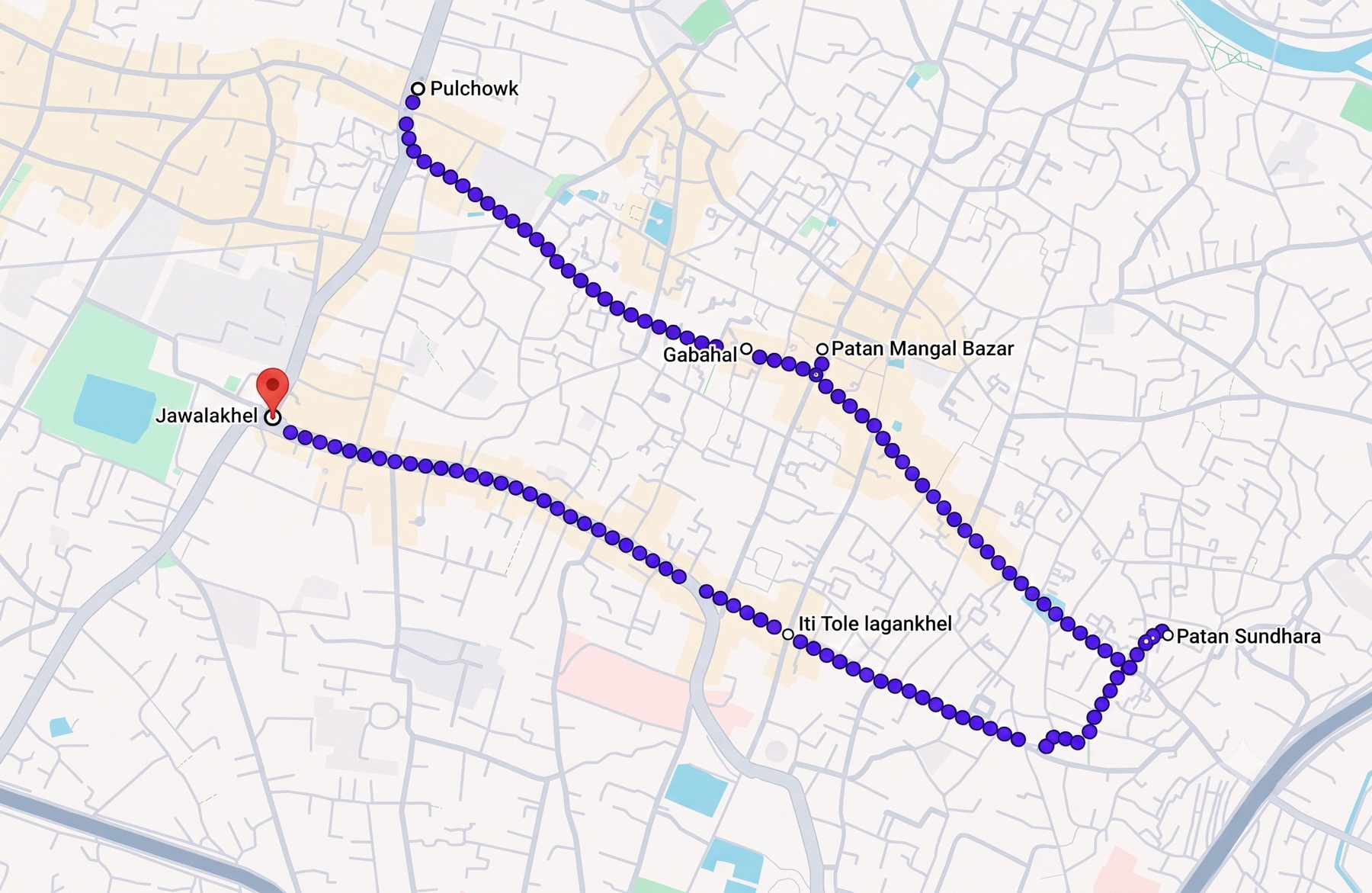
The entire festival takes place within Patan. It starts at Pulchowk, where the chariots are constructed, and over multiple weeks they are pulled along the following route: Gabahal, Mangal Bazaar, Sundhara, Chakrabahil, Lagankhel, and finally Jawalakhel. The days and times when the chariots are pulled depend on the sait (auspicious time calculated by astrologers based on planetary positions), and only one stop is made per day.
The stops are located at various sites, each dedicated to a Yogini (divine goddess) honored alongside Bunga Dyo. Each stop holds its own significance; for example, in Lagankhel, the Nariwal Khasalne tradition involves a priest climbing onto the chariot to drop a coconut, which is believed to bring good fortune to whoever catches it. In Jawalakhel, cooked rice is sprinkled on the floor to honor the deity of abundant harvests, followed by the tradition of displaying the Jeweled Bhoto (jeweled vest) to the public, before concluding the festival.
Chariots are also pulled through the historic Patan neighborhoods to make the festival accessible to those unable to visit the deity directly, such as the elderly, children, or people with disabilities. It is believed that the deity blesses the entire city during the procession, and blessings can be received from rooftops and windows at home, or by visiting stops along the route.
Question 05
Who gets to pull the chariot? When you attend the festival, what do you actually do? Are there things that are forbidden or considered bad luck during the festival period?
Anyone can volunteer to pull the chariot; there are no restrictions. On the day of the pulling, you can worship the god and bring offerings by handing them to the dedicated Newari Buddhist priests (Vajracharyas) on the chariot. But no meat items should be offered; only plant-based offerings are accepted, like flowers and vegetarian food. Another bad omen is failing to pull the chariot to the next stop before sunset. If the sun goes down, they have to stop where they are and continue from there the next day. However, this happens rarely.
Question 06
Looking at the painting, what details do you notice? Does the figure look like Bunga Dyo to you?
Yes, the figure in the painting clearly resembles Bunga Dyo. In the second register (scene 10), the temple shown is identical to the Bungamati temple in real life, featuring the red figure of Bunga Dyo inside, surrounded by other deities. I also recognize the different processions from the festival depicted in the artwork. For instance, in the third register (scene 19), the chariots closely match their real-life counterparts. The painting also shows the process of placing Bunga Dyo temporarily in a kalash (vessel) before priests shower and clean his statue. Finally, it depicts the deity being carried on a Khat (palanquin) by priests to Bungamati after the festival, accompanied by a grand procession featuring Newari instruments such as the Kaha Baja (long horns blown to produce sound).
Interestingly, while the deity’s feet are painted in the artwork, in reality, they are covered and hidden from view. Similarly, the painting shows a man drinking an alcoholic beverage through a spout emerging from a Bhairav mask, a tradition that has been discontinued in Patan due to concerns about the mask being stolen.
Question 07
Have you seen such bilampaus before? If so, where?
Yes, I’ve seen such paintings before at the Patan Museum. Such paintings on cloth are popularly displayed there.
Question 08
Have you heard the story of how the festival started? What version do you know about?
I think the version of the Rato Macchindranath festival I know is the most popular. It features Gorakhnath, the serpents, and King Narendradev. You should check out “Yomari Cartoon Series” on Facebook. They have created a fun, comic-book-style post that tells the entire legend.
The chariot route
All of the stops Bunga Dyo makes